
D&C Fence Co will need the linear footage, height of the fence to be installed, the number of gates with dimensions, type of desired materials, and location of the project. We will need to know what surface (dirt, thru asphalt, cement, rock, or brick) the fence will be installed into and if an existing fence will need to be removed. Most of the time with this information, D&C Fence can provide a reasonably accurate estimate.
The best material to use for fencing in our salty climate is vinyl or aluminum. If you are looking for an ornamental look, we recommend aluminum over Iron because of rust, and it comes with a manufacturer’s limited lifetime warranty. If you’re looking for privacy, picket style, or even 3 rail corral fencing, we recommend Country Estate Vinyl products. Country Estate fencing comes with a 50-year non-prorated warranty that is transferable. No other vinyl manufacturer in the business comes with this great warranty. Many offer a non-transferable lifetime warranty. The keyword being non-transferable; If the house is sold, the warranty is void.
A 50% down payment is generally required to begin your fence project and custom orders. Down payments may be waived for certain projects and typically no down payment is required for commercial or industrial projects, unless otherwise specified in our contract
D & C Fence Company offers the BEST warranty compared with our competitors in most cases.
Our Warranty: Guaranteed to be free from defects in material or workmanship for four years of completion including weather for the first year not including natural disasters. D&C Fence cannot warrant wood products that may over time warp, split, or shrink. This is a natural characteristic of some woods that the Contractor has no control over.
Aluminum and Vinyl/PVC fence comes with a manufacturer’s limited lifetime warranty.
Gate operators come with a manufacturer’s warranty plus D & C Fence will warranty labor for one year.
- Aluminum Fence comes with a manufacturer’s limited lifetime warranty
- Country Estate Vinyl Fence comes with a manufacturer’s 50 year non pro-rated warranty
- D&C gives a standard one year warranty on all materials and labor installed by D & C per contract bid given
- Gate operator and access control warranties vary per manufacturer and will be supplied per bid basis
D&C Fence Co. Inc is fully insured for your protection, carries worker’s compensation insurance, and exceeds most general liability insurance requirements with the ability to be bonded as needed. We take your safety and protection seriously!
Scheduling can differ depending on the current workload, size of your project, weather conditions and if the project is a custom order. D&C makes every effort to schedule your project and complete on a timely basis and within the agreed contractors project start and finish timelines
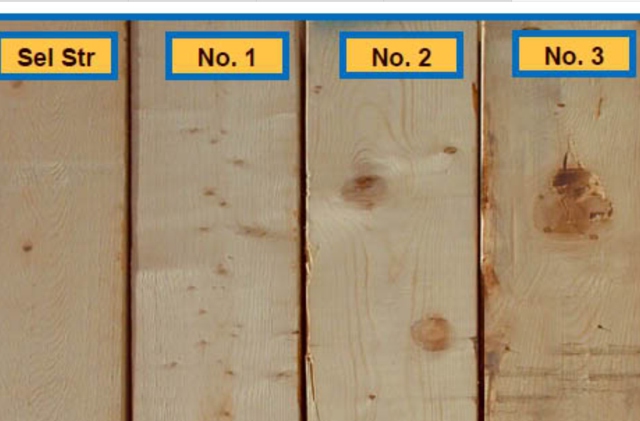
Many factors determine the grade of lumber, including the bark on edges, machining defects, species, number, size, the position of knots and holes, decay, bowing, warping, and twisting.
The U.S. Department of Commerce establishes the rules for grading. The rules are maintained by the American Lumber Standards Committee (United States). These standards are enforced by regional organizations such as (Western Wood Products Association, Southern Pine Inspection Bureau, California Inspection Service, and others).
FAS, which was years ago short-hand for the grade of “First and Seconds” is the highest grade of hardwood lumber. Most FAS lumber is exported rather than cut in the U.S. as its value, kiln-dried, is often quite expensive.
FAS 1-Face is a select piece of lumber that is 6 inches and wider
Select is a No. 1 Common piece of lumber (the poorer side grades No. 1 Common) and the reverse side (the better side) grades FAS. The price of Selects and 1-Face is usually the same as FAS. Much of this grade is also exported, but if exceptionally long, wide, and clear on both faces, cuttings are required, then Select lumber is often used. Often, Select grade lumber is used in the Northern U.S., while 1-Face is used in the South.
* No. 1 is the standard furniture grade lumber, and provides a good selection of long, medium length, and short cuttings at a reasonable price.
* No. 2 has become the standard grade for cabinets, millwork, and other uses requiring medium to short cuttings. Often current prices favor using No. 2 Common instead of No. 1 common for furniture. Stain and other sound defects are admitted in the clear cuttings. It is an excellent paint grade
* No. 3 is widely used for flooring and pallets, basis of sound cuttings rather than clear cuttings. It is widely used for pallets and crating
You can find the International Swimming Pool and Spa Code at https://codes.iccsafe.org/content/ispsc2018/chapter-3-general-compliance.